
Did you know that the global fashion industry ships over 150 billion clothing items every year? That’s a huge amount of stock constantly moving from factories to warehouses, to stores, and then to your doorstep. And behind all this movement, there’s one system quietly keeping everything in order: Apparel Warehousing.
We don’t usually stop and think about where our clothes hang out before they reach us. But every single piece, whether it’s a basic tee or a trendy jacket, makes a pit stop in a warehouse. That’s where it gets sorted, checked, stored, and packed so it’s ready to ship out on time.
So, let us define what apparel warehousing is, why it matters, and how it helps fashion brands stay on track.
Apparel warehousing is the organized storage, handling, and movement of clothing products before they reach retailers or customers. It’s the “home base” for all garments, where every item is received, sorted, and prepared for its next destination. Before clothes hit your favourite store shelves or your online shopping cart, they sit in a place designed specifically to:
Apparel warehousing isn’t just “keeping clothes in a big building.” It’s a structured process built for items that come in hundreds of styles, sizes, fabrics, and SKUs.
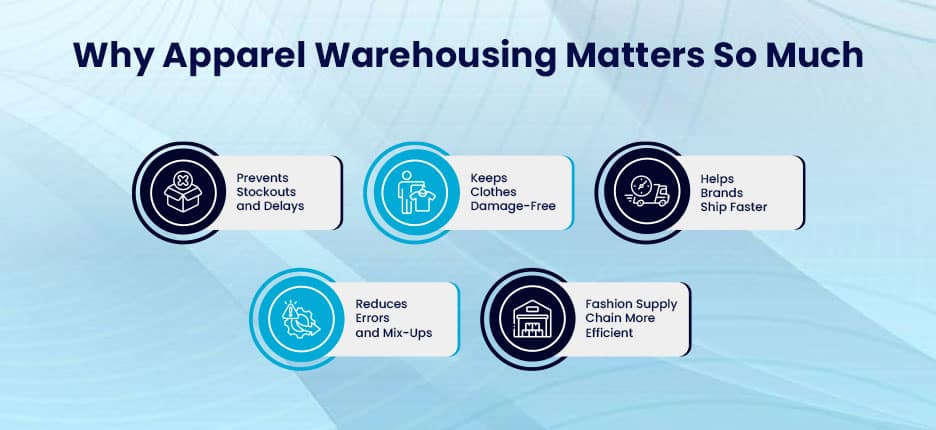
We are all aware of how fast the fashion industry keeps moving with changing trends, seasonal shifts, and customer expectations. So, apparel warehousing is what helps brands stay ready, organized, and efficient.
Let’s say there is a customer who is trying to buy a trending outfit and is finding it sold out everywhere. He will definitely feel a bit frustrated at this point. But, a well-run warehouse helps prevent that by keeping products stored, tracked, and restocked at the right time.
Clothing is something that requires proper care while it is stored. This includes ensuring the right temperature, dust protection, and well-managed racks. And especially for delicate fabrics or premium pieces.
If there is an inventory that is well organized and easy to find, orders get picked, packed, and shipped much quickly. This helps in delivering the orders to the customers on time.
Accurate labelling, barcode scanning, and better tracking systems help ensure the correct size, colour, and product reach the right customer.
Whether it’s handling bulk shipments for stores or preparing individual online orders, apparel warehousing keeps every step of the process running smoothly.
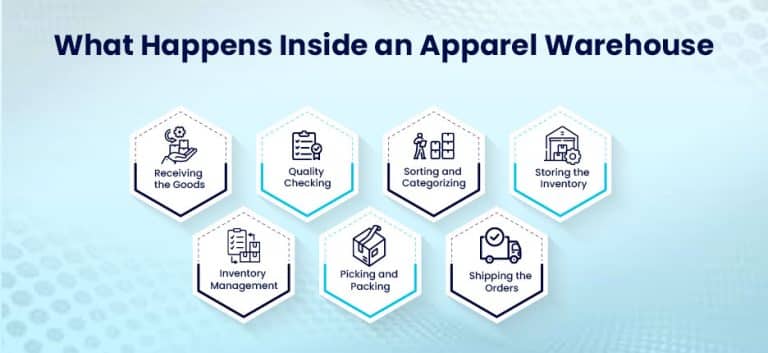
This one is the first stage where clothing reaches the warehouse from factories or suppliers. Next, the team unloads each shipment, inspects each box, counts the items, and ensures each time matches the order details. This is done to check whether the products received are correct or not.
Before the items go into storage, they go through a quick quality check. They are inspected for damage, loose threads, wrong sizes, colour mismatches, or missing labels. The items that pass this inspection move forward, removing the chances of customer complaints later.
Once items are approved, they’re sorted to keep the warehouse organized. Clothes are arranged by size, colour, style, SKU, or even season. This system makes it easier and faster for warehouse staff to locate products when orders come in.
After the sorting is done, items are stored in the proper place. Warehouses make use of racks, shelves, bins, garment-on-hanger (GOH) systems, or even temperature-controlled sections for delicate fabrics. In the end, keeping clothes clean, safe, and easy to access is all that matters.
Inventory management is what keeps the entire operation running smoothly. With the introduction of modern software, it has become easy to track stock levels in real time, confirming what’s available, what needs to be stocked soon, and which are best sellers and low sellers.
When an order comes in, the warehouse team handles pick and pack fulfillment by finding the right item, double-checking it, and packing it neatly. . For online orders, extra care is taken so clothes don’t arrive wrinkled or damaged. Good picking and packing ensures customers receive exactly what they expect.
Last but not least, packed orders are then handed over to delivery or courier partners. A smooth shipping process depends heavily on how well the warehouse operates. When everything is organized inside, orders reach customers quickly and without issues.
See how effective warehousing keeps your apparel brand running smoothly, ensuring faster deliveries, fewer mistakes, and happier customers
With our Apparel Warehousing and Fulfillment and Reverse Logistics solutions, brands can manage demand spikes, handle returns, and keep inventory flowing smoothly without disruptions.
Now let’s tie everything together. Fashion is fast. Trends move quickly. Customers expect next-day delivery. Retailers expect stock on time. Manufacturers need space to send bulk shipments.
Interested in how warehousing keeps other industries moving too? Read our blog on the role of automotive warehousing in a smooth-running supply chain.
The next time you get a perfectly packed outfit at your doorstep or find your size waiting at the store, remember a whole warehouse team quietly made that happen. Warehousing also handles returns, surprise sales, and even reduces waste behind the scenes.
So while fashion moves fast, this system keeps everything calm and coordinated. Makes you look at your wardrobe a little differently, doesn’t it?
Looking for a reliable apparel warehousing partner? Explore PPFD’s solutions to get started.
Many apparel warehouses use barcode scanners, RFID tags, automated sorting systems, and warehouse management software (WMS) to speed up tracking and reduce manual errors.
Yes, many warehouses offer value-added services like steaming, de-wrinkling, folding, tagging, and attaching price labels to make products store-ready.
Absolutely. Fast fashion warehouses prioritize speed and high volume, while premium brands require more careful handling, quality checks, and specialized storage.
They use CCTV, restricted access zones, inventory audits, RFID tracking, and secure storage areas to protect valuable stock.
Share :
get started
Our team is eager to partner with you and show why PPFD is the go-to choice for businesses aiming to streamline their logistics and distribution.